





The money’s on the shop floor
To remain competitive, toolmaking businesses need to tap into savings potential beyond manufacturing. One area that is often underestimated is internal logistics. Craemer’s toolmaking department uses plastic pallets and pallet collars from the company’s own product range to transport components and make them available where needed. With a modest amount of effort, this can reduce disruptions to material flow and increase productivity.
An urgently needed tool insert has been manufactured but is not at the designated workstation. A slide slips into a gap in a wooden pallet during transport and disappears, never to be seen again. A pallet of tool components in a confined space can only be picked up with extra manoeuvring. These situations show how the often-overlooked processes that take place between workstations affect the cost-effectiveness of a job. Toolmaking businesses seeking to save wherever possible therefore need to consider the entire process.
Continuous improvement as a guiding principle
At Craemer’s toolmaking department in Herzebrock-Clarholz, optimising internal processes is part of an integrated approach to manufacturing. The department develops and manufactures high-precision tools for metal forming as well as injection moulds for the group’s own plastics processing operations. In addition to the family-run group’s business divisions, it serves external customers, including those in the automotive, domestic appliance and fittings industries.
The range extends from tools for small and large-format metal parts to moulds for one-piece injection-moulded pallets and containers. In the ‘Craemer Circle of Tools’, development, simulation, tool design, toolmaking, tool trials and maintenance are closely linked. Knowledge transfer between these areas and a focus on lifecycle costs form the basis for continuous improvement.
This approach was recognised in the ‘Excellence in Production’ competition: Craemer reached the final in the ‘In-house Toolmaking with 50 or More Employees’ category in 2024 and 2025, twice ranking among the best in its category.
‘For us, process optimisation means continually reviewing every step in production with a critical eye. That includes being able to track the movements of every tool and piece of equipment in as much detail as possible, as well as minimising sources of error,’ explains Torsten Kersting, Head of Toolmaking at Craemer GmbH.
Safe transport, robust load carrier
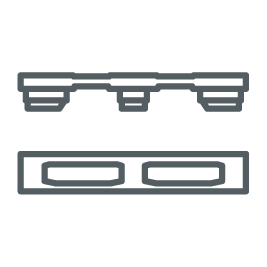
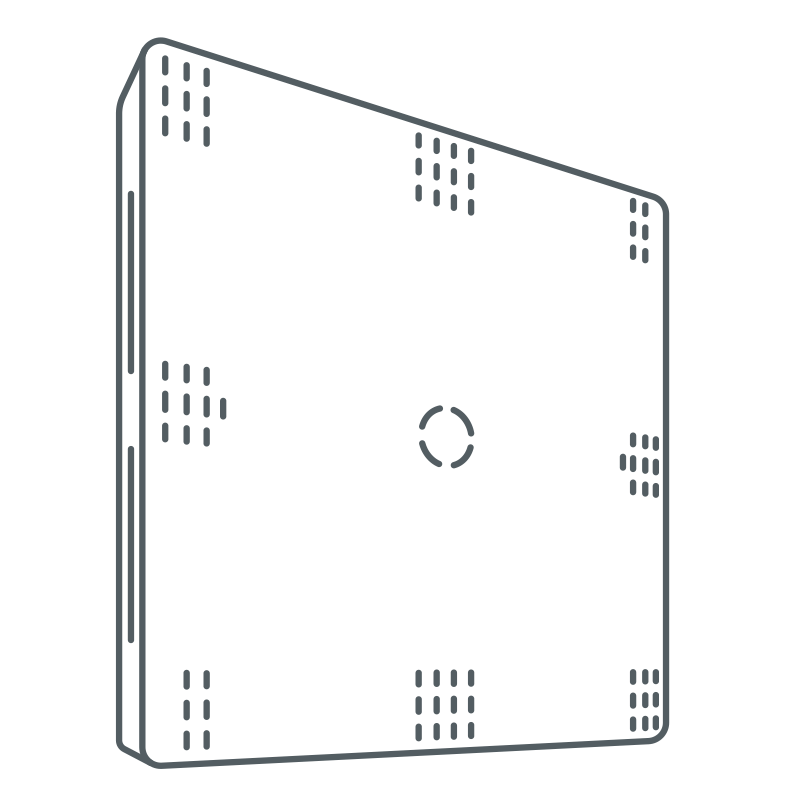
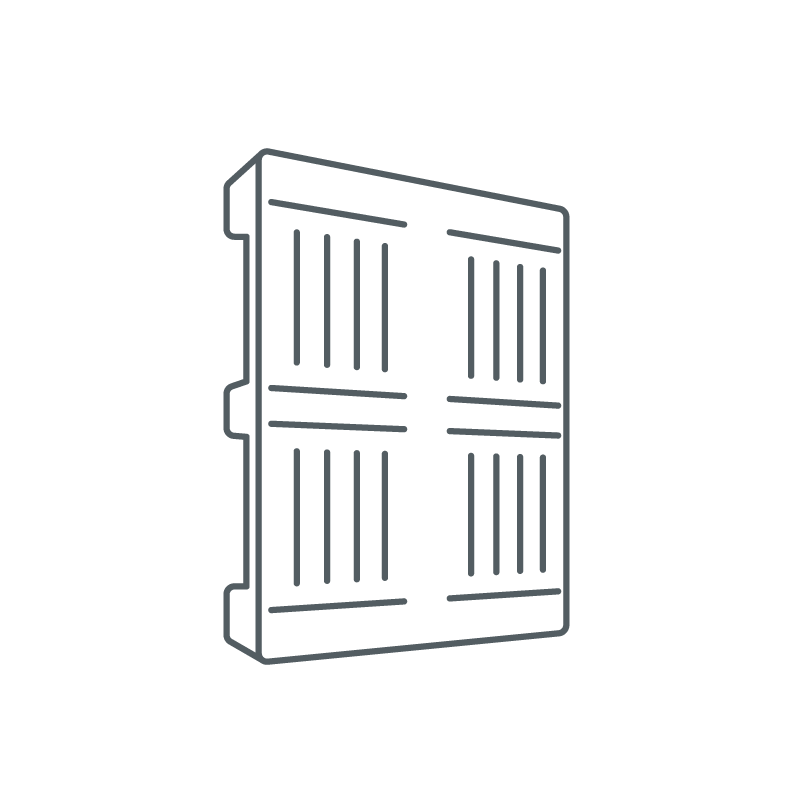
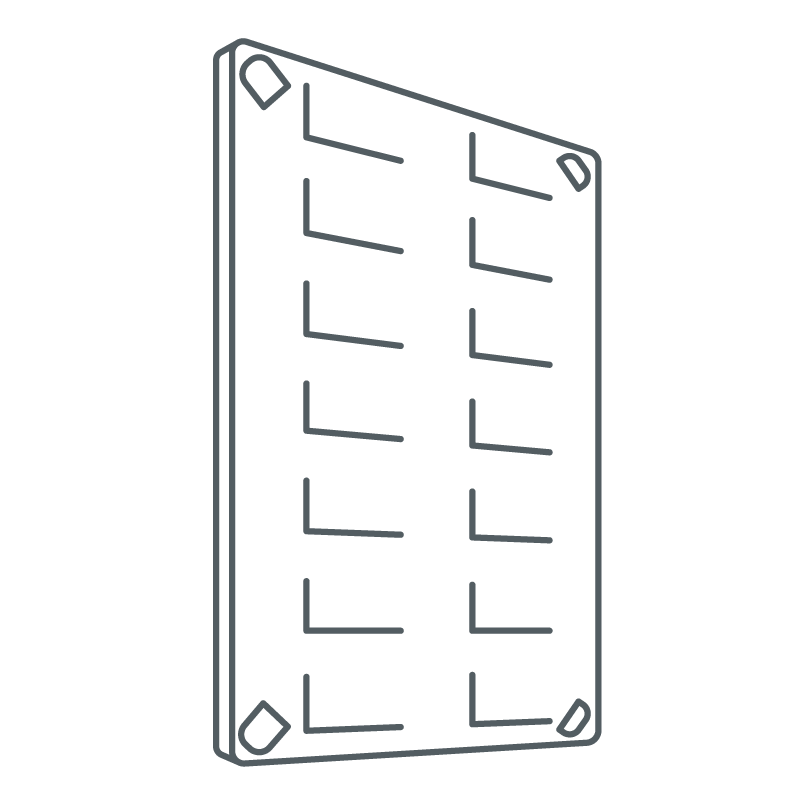
For internal logistics, Craemer uses its own pallets and pallet collars to transport inserts, slides, standard components and other tool components. The Craemer TC1 pallet in Euro format has a completely closed deck and is equipped with the Palgrip® anti-slip surface. The advantage over a conventional wooden pallet with an open deck is that small parts in particular cannot slip into gaps. This eliminates the risk of parts getting trapped in these gaps or damaged there by the forks when the pallet is lifted. The full-surface Palgrip® anti-slip deck on Craemer’s TC pallet also helps counteract load shifting as the forklift moves off, brakes or changes direction.
The pallet’s material properties also offer advantages in toolmaking: plastic pallets do not splinter and contain no nails that could damage tool components or equipment or cause injuries. The completely closed surfaces of TC pallets are easy to clean – an advantage when removing swarf, oil or cutting fluids. Unlike wood, plastic does not absorb moisture. These robust load carriers are suitable for long-term, trouble-free use in internal logistics loops. Their long service life reduces the need for replacements and cuts costs.
Flexible handling with pallet collars
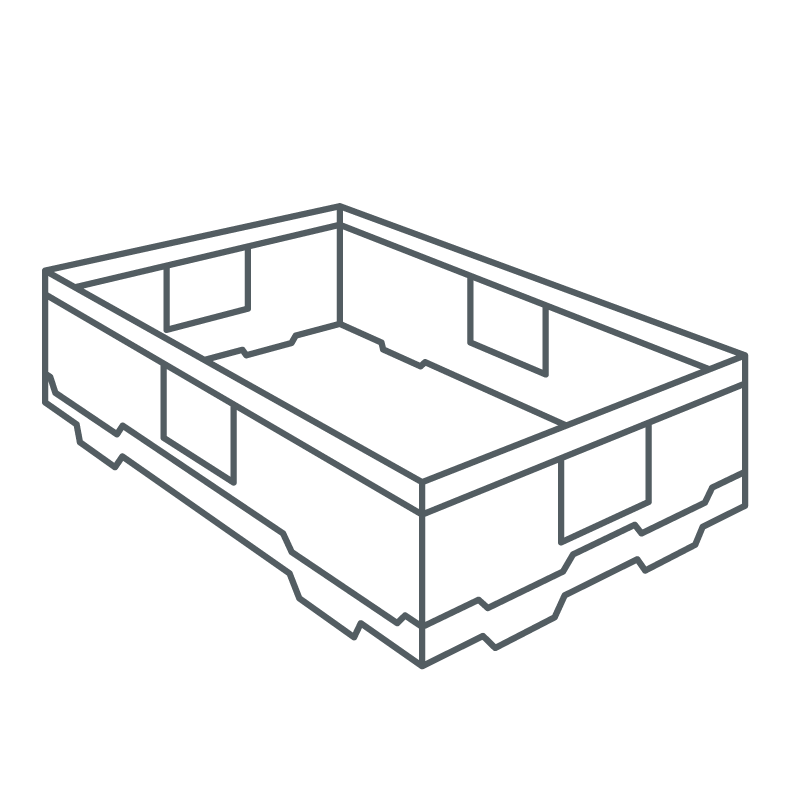
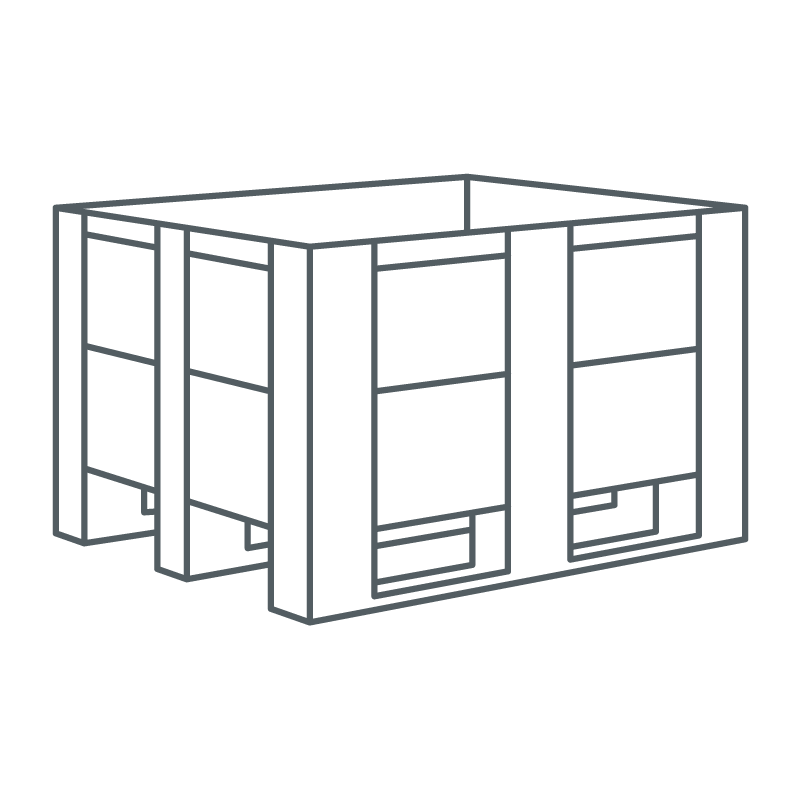
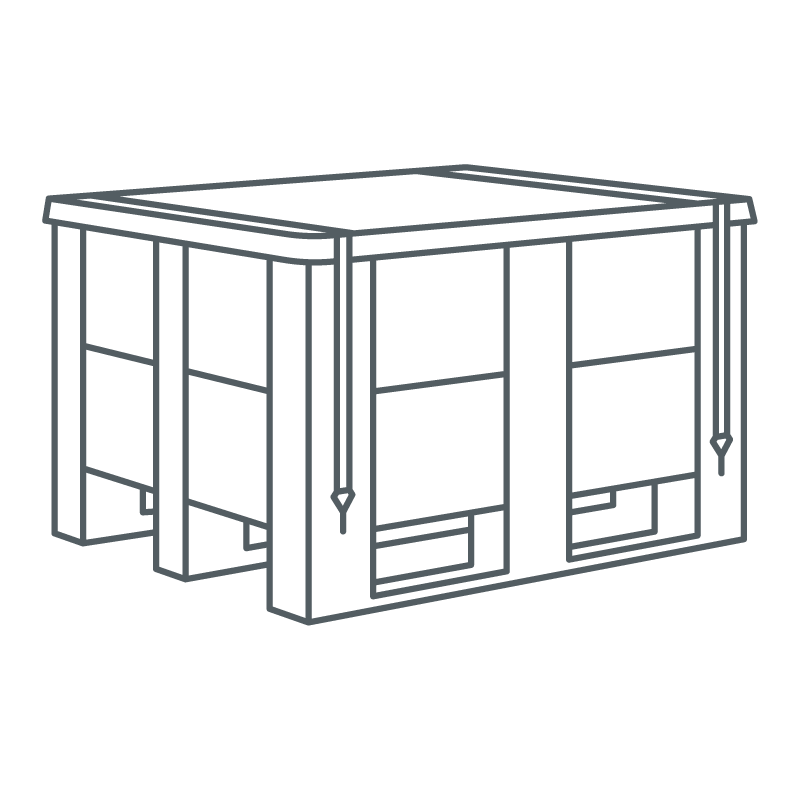
The CC1 pallet collar adds sides to the TC pallet. Tool components that belong together can be grouped into a single transport unit and made available as a set. Depending on the height of the load, up to three collars can be stacked on top of one another. This allows the unit to be adapted to different components.
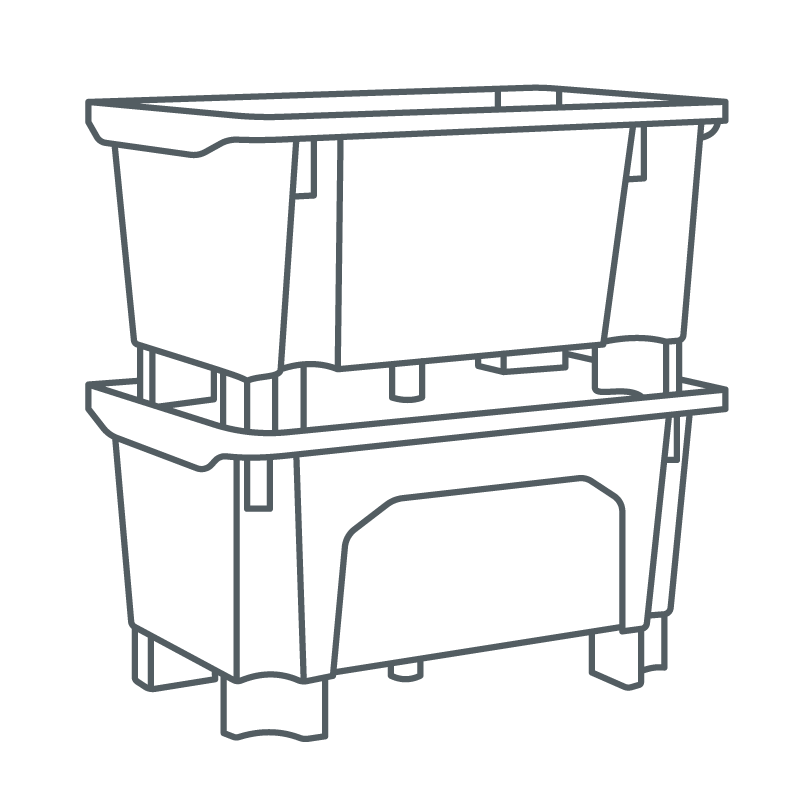
The pallet’s four-way entry allows quick, efficient handling on the shop floor. The pallet can be picked up from different directions, making it easier to access where space for storage and manoeuvring is limited. Unused CC1 pallet collars can be folded to reduce their volume by 75 per cent, making them easier to store and transport when empty.
No more searching for pallets
Locating pallets is another challenge. When a pallet is moved at short notice, not everyone involved will necessarily know its new location. The search often begins only when the components are needed. The time spent searching may be compounded by waiting time at the next workstation.
Unique identifiers offer a way of reducing this reliance on the knowledge of individual staff members. A barcode, QR code or optional RFID transponder can link a pallet to a job and its contents. If movements and storage locations are recorded, the last documented location can be retrieved.
‘Internal logistics should support skilled staff in their work. If parts are protected, clearly grouped together and easy to locate, we create better conditions for a smooth workflow,’ says Kersting.

A closed deck with no gaps: the TC pallet provides a continuous support surface for tool components. The full-surface Palgrip® anti-slip deck helps prevent loads from slipping during transport by forklift. Photo: Craemer Group

Keeping components organised and ready between production steps: at Craemer’s toolmaking department, plastic pallets and pallet collars from the company’s own range help transport tool components and accessories together. Photo: Craemer Group

Finding components without lengthy searches: scannable codes on pallets and racking locations help identify tool components at Craemer’s toolmaking department, helping to reduce the time spent searching. Photo: Craemer Group
Conclusion: Cutting costs between workstations
Craemer’s example shows that reducing costs need not depend solely on new machinery or shorter machining times. Transporting components and making them available where needed offer scope for savings that can be realised with suitable load carriers and clear procedures. Businesses that recognise internal logistics as a driver of efficiency and improve it systematically will leave no money on the shop floor.
Status of Information: 10/2026
Craemer House
Hortonwood 1
Telford, Shropshire TF1 7GN
United Kingdom
Free-phone number for your inquiry:
Wheelie Bins: 0800 032 4289
Plastic Pallets: 0800 032 4291
Fish Boxes & Containers: 0800 032 4292